
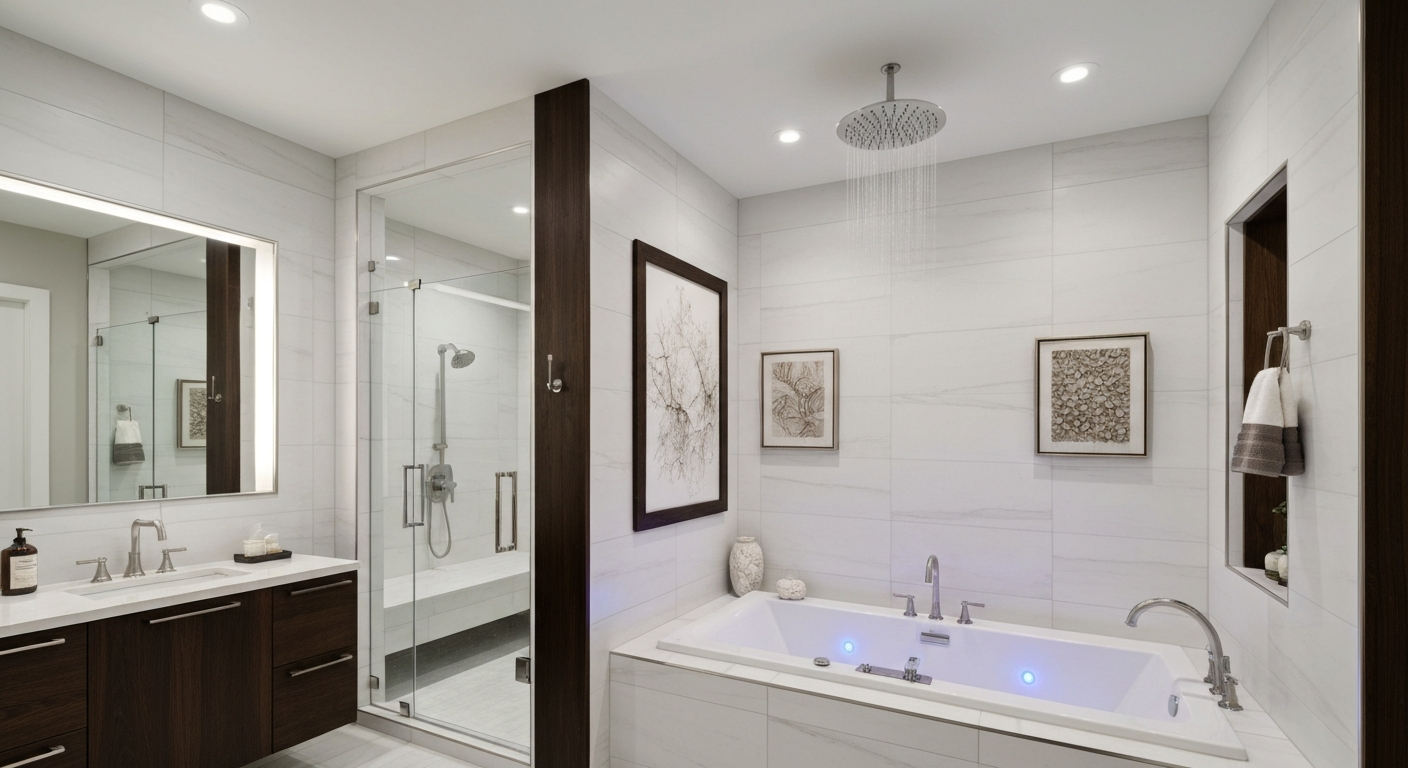
Bathroom Remodeling in Jacksonville, FL
A bathroom remodel can be a targeted update, a larger renovation, or a project that changes how the room is laid out and used. Jacksonville Home Improvements helps homeowners understand those options and can assist with provider coordination when appropriate. Independent providers perform the work — you decide whether to hire and move forward.
Homeowner-first project assistance. Independent providers perform the work. You remain in control of the final hiring decision.
Bathroom Remodeling Projects You Can Explore
Bathroom remodeling can involve one part of the room or nearly everything in it. Understanding what you want to change helps define the project's scope before estimates and material selections begin.
Showers & Tubs
Shower replacement or remodeling
Walk-in showers
Bathtub replacement
Tub-to-shower conversions
Shower tile and surrounds
Shower glass and doors
Vanities & Storage
Vanities and bathroom storage
Sinks and countertops
Mirrors
Surfaces
Bathroom flooring
Tile
Wall and finish updates
Fixtures & Systems
Faucets
Toilets and plumbing fixtures
Lighting
Ventilation
Plumbing or electrical changes
Layout & Accessibility
Layout changes
Accessibility improvements
Some of these can be relatively focused improvements. Others can affect multiple trades or systems within the bathroom. The right starting point is not choosing a label for the project. It's identifying what needs to change and why.
What Type of Bathroom Remodel Are You Planning?
You do not need to know the construction terminology or have every selection made before you start planning. It can help to think about your bathroom in three broad categories.
Targeted Bathroom Update
- Vanity
- Fixtures
- Mirror
- Lighting
- Flooring
- Paint or finish changes
The existing layout may still work, but parts of the room need attention. This can make sense when the basic function of the bathroom still fits the household.
Substantial Bathroom Renovation
- Shower or bathtub
- Vanity
- Flooring
- Tile
- Fixtures
- Lighting
- Storage
- Broader finish work
More of the bathroom changes at the same time. The existing layout may remain largely intact even though much of the visible bathroom changes.
Layout-Changing Bathroom Remodel
- Moving plumbing fixtures
- Changing shower or bathtub location
- Modifying walls
- Significant electrical changes
- Structural changes
The project changes more than finishes. This can increase the number of decisions and trades involved.
These categories are planning descriptions, not pricing tiers or standardized project packages. An independent provider determines the actual scope after evaluating the project.
What to Consider Before Remodeling a Bathroom
How is the bathroom used?
A primary bathroom used every morning has different priorities from a guest bath or powder room. Think about who uses the room, when they use it, and what creates frustration now.
Shower, bathtub, or both?
Consider how members of the household actually bathe today and how those needs may change. Replacing a bathtub with a walk-in shower can improve usability for some households, while keeping a tub may make more sense for others. There isn't one answer that fits every homeowner.
Is there enough storage?
Vanity drawers, cabinets, medicine storage, linen space, niches, and other storage can affect how usable the finished bathroom feels.
Does the layout work?
A bathroom can have attractive finishes and still be frustrating if doors interfere with fixtures, circulation feels cramped, or frequently used items are difficult to reach.
What needs to remain?
Not everything necessarily needs replacement. Identifying what can stay helps separate priorities from optional improvements.
Are accessibility needs changing?
Easier entry into a shower, better clearances, grab-bar planning, seating, and other accessibility considerations may be worth discussing when planning for long-term use.
What level of disruption can the household handle?
This matters especially when the bathroom being remodeled is the household's primary or only full bathroom. Ask prospective providers how the planned scope may affect access to the room.
What budget are you comfortable discussing?
You do not need every cost figured out in advance. Having a realistic comfort range can help providers understand whether the desired scope and material choices align with your priorities.
Showers and Bathtubs
The bathing area is often one of the biggest decisions in a bathroom remodel. A homeowner may be considering replacing an existing tub or shower, rebuilding a shower area, changing tile and surrounds, installing shower glass, or converting a bathtub area into a shower.
Walk-In Showers
A walk-in shower can be worth considering when shower access, ease of use, or the existing bathing layout is a priority. The design involves more than the visible tile. Depending on the project, decisions can include the shower base, waterproofing system, drain, fixtures, glass, storage niches, seating, and surrounding finishes.
Bathtubs
Keeping or replacing a bathtub can make sense when household bathing preferences call for one. Before removing a tub, consider how the household uses the bathroom now, anticipated future needs, available space, and your own resale priorities. There is no universal rule that every bathroom should have a tub or that every tub should be replaced with a shower.
Tub-to-Shower Conversions
A tub-to-shower conversion changes the bathing area rather than simply changing its appearance. That can introduce decisions involving plumbing, waterproofing, drainage, wall surfaces, fixtures, glass, accessibility, and surrounding finishes.
Vanities, Flooring, Tile, Fixtures and Shower Glass
The visible materials get much of the attention during bathroom planning, but they also affect maintenance, storage, usability, and the overall project scope.
Vanities and Storage
Think beyond the cabinet style. Consider counter space, drawers versus doors, sink configuration, frequently used items, electrical access, mirrors, lighting, and how much storage the household actually needs.
Bathroom Flooring
Appearance is only one consideration. Homeowners should also consider how a flooring material fits a bathroom environment, how it will be maintained, how it feels underfoot, and how it transitions into adjacent rooms.
Tile
Tile choices can affect the shower, walls, floors, cleaning routine, visual scale, and installation complexity. Rather than selecting tile only from a sample, consider where it will be used and how the complete surface will look and function.
Fixtures
Faucets, shower controls, toilets, sinks, lighting, and related fixtures should be considered as part of the overall plan rather than as isolated purchases.
Shower Glass and Mirrors
Glass can affect both the appearance and usability of the bathing area. Shower configuration, available space, door movement, hardware, and cleaning preferences can all matter when evaluating the options. Learn about custom glass and mirrors.
Bathroom Remodeling Cost and Project Scope
There is no single useful price for every Jacksonville bathroom remodel because the word "remodel" can describe very different projects. Replacing several finishes is not the same scope as rebuilding a shower, relocating plumbing, or changing the room's layout.
Factors that can affect an estimate include:
Bathroom size
Amount of demolition
Shower or bathtub work
Vanity and storage selections
Countertops
Tile quantity and complexity
Flooring
Plumbing changes
Electrical changes
Lighting
Fixtures
Shower glass
Material selections
Layout changes
Accessibility features
Conditions discovered after work begins
This is also why homeowners should compare scope, not just the number at the bottom of an estimate. Two estimates can have different totals because they include different materials, allowances, responsibilities, or exclusions.
How to Compare Remodeling EstimatesPlumbing, Electrical Work and Permits
Bathroom remodeling can involve more than visible finish work. Moving a sink, shower, bathtub, toilet, lighting, outlets, or other components can introduce plumbing or electrical work. Layout changes may add further project considerations.
Permit requirements depend on the work being performed and the applicable jurisdiction. Do not assume that every bathroom update requires the same permits — or that no permit is necessary because the room already exists.
The independent provider should identify the work being proposed and explain applicable permit responsibilities as part of the project discussion. For Jacksonville-area homeowners outside the same permitting jurisdiction, requirements can differ. Verify the requirements that apply to the project's actual address and scope.
Waterproofing, Ventilation and Moisture Management
Some of the most important parts of a bathroom remodel may not be visible when the room is finished. A tiled shower, for example, is more than tile and grout. The complete assembly and the systems behind the finished surface matter.
Ventilation is another planning consideration, particularly when changes to the bathroom affect the room's existing configuration or mechanical needs.
Questions worth asking a prospective provider:
- What is included behind the finished shower surface?
- What waterproofing approach is included in the proposed scope?
- Is ventilation part of the project?
- Are existing systems being reused or changed?
- Which responsibilities are included in the estimate?
The goal isn't to become a construction expert before hiring someone. It's to understand enough to compare what different proposals actually include.
Accessibility and Aging-in-Place Considerations
A bathroom remodel can also be an opportunity to think about how the room may need to function in the future. That doesn't mean every bathroom needs to look institutional or be designed around needs that don't exist. It means considering usability while walls, fixtures, and finishes are already being evaluated.
Depending on the homeowner and project, topics worth discussing can include:
Easier shower entry
Shower seating
Grab-bar locations or future planning
Fixture placement
Clearances
Flooring
Lighting
Storage accessibility
Ease of operating fixtures
If long-term accessibility is an important goal, bring it up early. It may affect layout and product decisions that are harder to change later.
How Jacksonville Home Improvements Helps
Tell Us What You're Considering
Share what you'd like to change, what isn't working now, and any priorities you've already identified.
We Review the Project Information
Jacksonville Home Improvements helps organize the request so the next step is based on the project you're actually considering.
Provider Coordination Where Appropriate
Homeowner communication, provider coordination, and network operations are handled through HomePros Team. Where appropriate, project information may be coordinated with an independent provider.
You Review Your Options and Decide
Independent providers are responsible for their own site evaluations, estimates, pricing, contracts, schedules, applicable permit responsibilities, workmanship, warranties, payment terms, and completion. You decide whether to hire.
How Bathroom Remodeling Providers Are Evaluated
Choosing who may work in your home deserves more than a vague claim about finding the "best contractor." Jacksonville Home Improvements uses its published Partner Standards to explain the standards and expectations associated with provider participation.
Those standards are separate from the homeowner's own evaluation. Before hiring any provider, review the proposal and contract yourself. Ask questions about scope, exclusions, payment terms, permits, scheduling, change orders, warranties, and anything else that affects your project. You remain responsible for deciding whom to hire.
Bathroom Remodeling Across Jacksonville and Northeast Florida
Bathroom projects throughout the Jacksonville area can range from focused updates to extensive renovations. The important local question isn't simply whether a provider says they "serve Jacksonville." It is whether the provider serves the project's actual location and can address the scope being considered.
Jacksonville Home Improvements supports homeowners across its published service area, with provider availability depending on project type and location. For projects outside Jacksonville's city limits or in another Northeast Florida jurisdiction, permitting and other local requirements may differ.
Related Bathroom and Interior Resources
Bathroom Remodeling FAQs
Ready to Take the Next Step With Your Bathroom Project?
You don't need every fixture selected or every construction detail figured out before asking for project help. Tell us what you'd like to change, what matters most, and where the project is located. Jacksonville Home Improvements can review the information and help with the next step in the process.
Submitting project information does not require you to hire a provider. Independent providers are responsible for their own proposals, contracts, project work, and related obligations. You retain the final hiring decision.